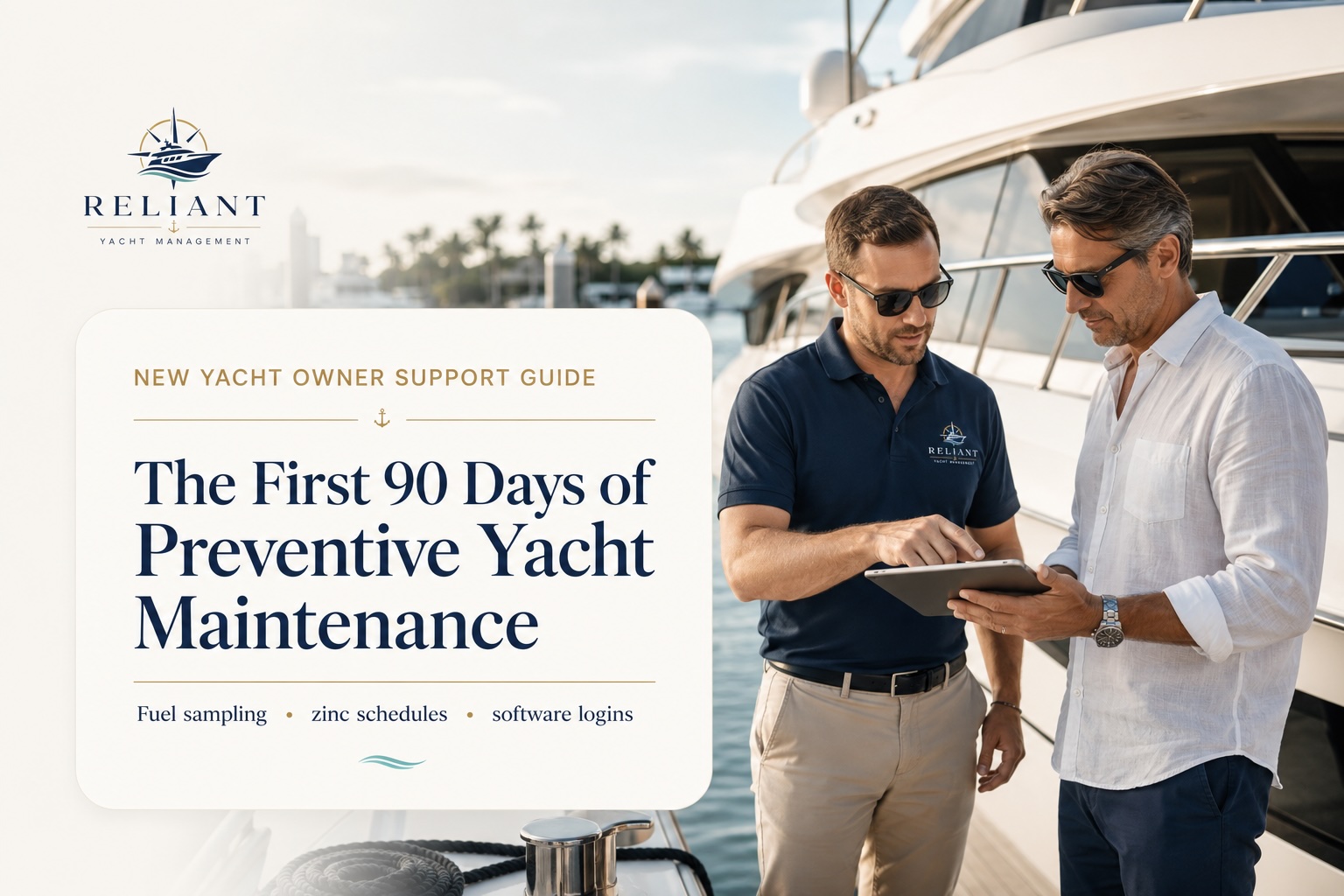
New Yacht Owner Support Guide: Your First 90 Days of Preventive Yacht Maintenance
The first three months of yacht ownership set the tone for everything that follows. Thoughtful preventive yacht maintenance early on will reduce surprises, control long‑term costs, and help you enjoy time on the water with confidence.
Whether your vessel is kept in Port Canaveral, Cape Coral, Cocoa Beach, or elsewhere along Florida’s Space Coast and Southwest Florida, the fundamentals are the same: document the boat’s condition, establish a clear maintenance rhythm, and make sure every task has an accountable owner.
Below is a practical 90‑day framework Reliant Yacht Management often uses when supporting new yacht owners.
Weeks 1–2: Establish Baseline Condition and Visibility
1. Complete a Detailed Condition Review
Start with a structured inspection, not a casual walk‑through. At minimum:
-
Hull & bottom
- Note antifouling paint age and condition
- Record last haul‑out date (if known)
- Inspect thru‑hulls, intakes, transducers
-
Engines & generators
- Log engine hours
- Check service stickers and manuals
- Note fluid levels, belt condition, obvious leaks or corrosion
-
Electrical systems
- Test shore power connections
- Confirm battery age, type, and charger settings
- Check major breakers, inverters, and panel labeling
-
Safety & compliance
- Lifejackets, flares, fire extinguishers, horn, navigation lights
- EPIRB/PLB registration and battery dates if installed
Document findings with photos, dates, and notes. A digital platform like Reliant Vessel Intelligence organizes this information into a clear vessel history, so you can see changes over time rather than relying on memory.
2. Get Control of Software, Logins, and Manuals
Modern yachts rely on technology as much as hardware. In the first two weeks, assemble and secure:
-
Navigation and electronics accounts
- Chartplotter updates (Garmin, Raymarine, Simrad, etc.)
- Autopilot, radar, AIS, and sonar settings and manuals
-
Engine and generator portals (if applicable)
- OEM apps for diagnostics and service records
-
Marina and monitoring systems
- Dockmaster or marina portal logins
- Remote monitoring or camera systems
- Insurance and towing service details
Keep digital copies of all manuals, wiring diagrams, and prior surveys in one place. Reliant typically uploads these to the Vessel Intelligence platform so owners have everything at hand, whether they are in Brevard County, Cape Coral, or out of state.
Weeks 3–4: Fuel, Fluids, and Corrosion Protection
3. Fuel Sampling and Basic Fluid Baselines
If you are new to the yacht or it has been sitting:
-
Fuel sampling
- Have a qualified fuel technician pull samples from tanks
- Look for water, microbial growth, or sediment
- Consider polishing and filter changes if contamination is found
-
Oil and coolant
- Change engine and generator oil and filters if service dates are uncertain
- Verify coolant condition and correct antifreeze mixture
- Inspect transmission fluid color and levels
For many owners, Reliant coordinates these services with trusted vendors, verifies the work, and logs the results, including lab reports and service invoices.
4. Zinc Schedules and Corrosion Checks
In warm, brackish waters around Port Canaveral, Merritt Island, Cape Coral, and Fort Myers, corrosion protection is critical:
-
Inspect all sacrificial anodes (zincs or aluminum)
- Shafts, rudders, trim tabs, thrusters, swim platforms, and hull plates
- Note type, installation date (if known), and remaining material
-
Set a zinc inspection schedule
- Commonly every 30–60 days for actively used saltwater boats
- Adjust based on local conditions and diver feedback
-
Check bonding system
- Have a competent marine electrician or surveyor evaluate bonding continuity if you see unusual corrosion patterns
A reliable vessel management partner tracks these zinc schedules and diver reports so replacements happen before protection is lost, not after damage appears.
Days 30–60: Build Your Preventive Maintenance Rhythm
5. Monthly Yacht Inspections and Checklists
By day 30, you should have a repeatable monthly yacht inspection process. Key recurring items include:
- Batteries and charger status
- Bilge pumps and float switches
- Shore power connections and load
- Freshwater, waste, and fuel tank levels
- Air conditioning strainers and filters
- Lines, fenders, and dock hardware
- Canvas, isinglass, and exterior finishes
For absentee yacht owners or those traveling frequently, Reliant provides routine vessel checks, photo documentation, and a clear summary of any emerging concerns. Every inspection is logged: what was checked, what changed, and what needs action.
6. Vendor Management and Repair Verification
Early in ownership, it is common to identify a list of “punch‑list” items: small leaks, inoperable lights, sticky hatches, electronics quirks.
Make sure:
- Each item is clearly described and photographed
- A qualified vendor is assigned
- Estimates and approvals are documented
- Completed work is verified and photographed
This is where professional yacht repair coordination and vendor management earns its value. Reliant acts as the owner’s representative, confirming that repairs and refit work are completed as agreed, rather than leaving you to interpret invoices from afar.
Days 60–90: Storm Preparation, Surveys, and Operational Readiness
7. Storm Readiness Planning
For yachts in Port Canaveral, Cocoa Beach, Cape Coral, Punta Gorda, and Naples, storm preparation is not optional. By the 60‑day mark:
- Decide in advance: haul‑out, relocation by captain, or in‑slip hardening
-
Confirm who will:
- Double and chafe‑protect lines
- Remove canvas and loose gear
- Secure tenders, toys, and exterior electronics
- Store written storm checklists and contact information in your vessel management system
Reliant provides structured storm preparation services, with before‑and‑after documentation so owners have clear visibility even if they are out of state.
8. Survey-Item Follow-Up and Punch List Closure
If you recently completed a pre‑purchase survey:
- Load the survey report into your documentation platform
- Convert each recommendation and deficiency into a tracked action item
-
Prioritize:
- Safety and compliance
- Water intrusion and corrosion
- Operational reliability and comfort items
This “survey‑item coordination” process moves the vessel from “just purchased” to “properly stabilized” within the first 90 days.
9. Captain Services and Real-World Shake-Down
Nothing reveals maintenance priorities like actual operation:
-
Schedule captain services for:
- Docking practice and route familiarization
- System operation walk‑throughs
- A controlled “shake‑down” cruise
During and after the trips, capture:
- Engine temperatures and performance notes
- Any alarms, odd noises, or handling quirks
- Comfort issues (vibrations, odors, leaks underway)
These experiences feed back into your preventive maintenance plan. Reliant captains and managers then work with technicians to address concerns while they are still manageable.
Technology-Assisted Management, Human-Led Decisions
Artificial intelligence can help organize photos, identify recurring issues in inspection histories, and highlight changes over time. On its own, it does not replace experienced captains, surveyors, and marine technicians. At Reliant, technology simply supports what matters most: Professional care aboard. Complete visibility ashore.
Every inspection documented. Every issue tracked. Every project followed through.
If you’re a new yacht owner in Port Canaveral, Cape Coral, or the surrounding waters and want a structured, transparent approach to your first 90 days of yacht management, Reliant Yacht Management is ready to help. Contact us to discuss a tailored vessel oversight plan for your boat.