After the Yard: How to Confidently Approve Work Before Your Next Trip
For many yacht owners, the most stressful moments don’t happen offshore—they happen right after the boat leaves the yard. You’ve invested time and money into service, repairs, or a refit. Now you’re asking the same question every busy or absentee owner asks:
“How do I know the work was actually done correctly before we load guests and cast off?”
A structured, post-service verification process answers that question. It replaces assumptions and quick dock checks with a calm, methodical review: fluids, alarms, leaks, runtimes, documentation, and signoffs. Done properly, it prevents breakdowns, awkward schedule changes, and last-minute cancellations.
Below is a practical, yacht-focused checklist Reliant uses as a framework when verifying work and conducting sea trials for owners on Florida’s Space Coast and in Southwest Florida.
1. Start With the Paper Trail, Not the Sea Trial
Before engines ever start, confirm what was supposed to be done and what was actually done.
Review yard documentation:
- Final work order and invoices
- Technician notes and recommendations
- Warranty information on parts and labor
- Any “declined” or deferred items
Questions to answer:
- Were all requested items addressed?
- Did the yard add any change orders you weren’t aware of?
- Are there open recommendations that should be scheduled, not forgotten?
At Reliant, this stage is logged in the vessel’s record so owners can see not just an invoice, but a narrative: what was done, why it mattered, and what still needs attention.
2. Conduct a Detailed Pre-Start Inspection
Walk the vessel slowly, with a checklist in hand. Treat it like a mini survey.
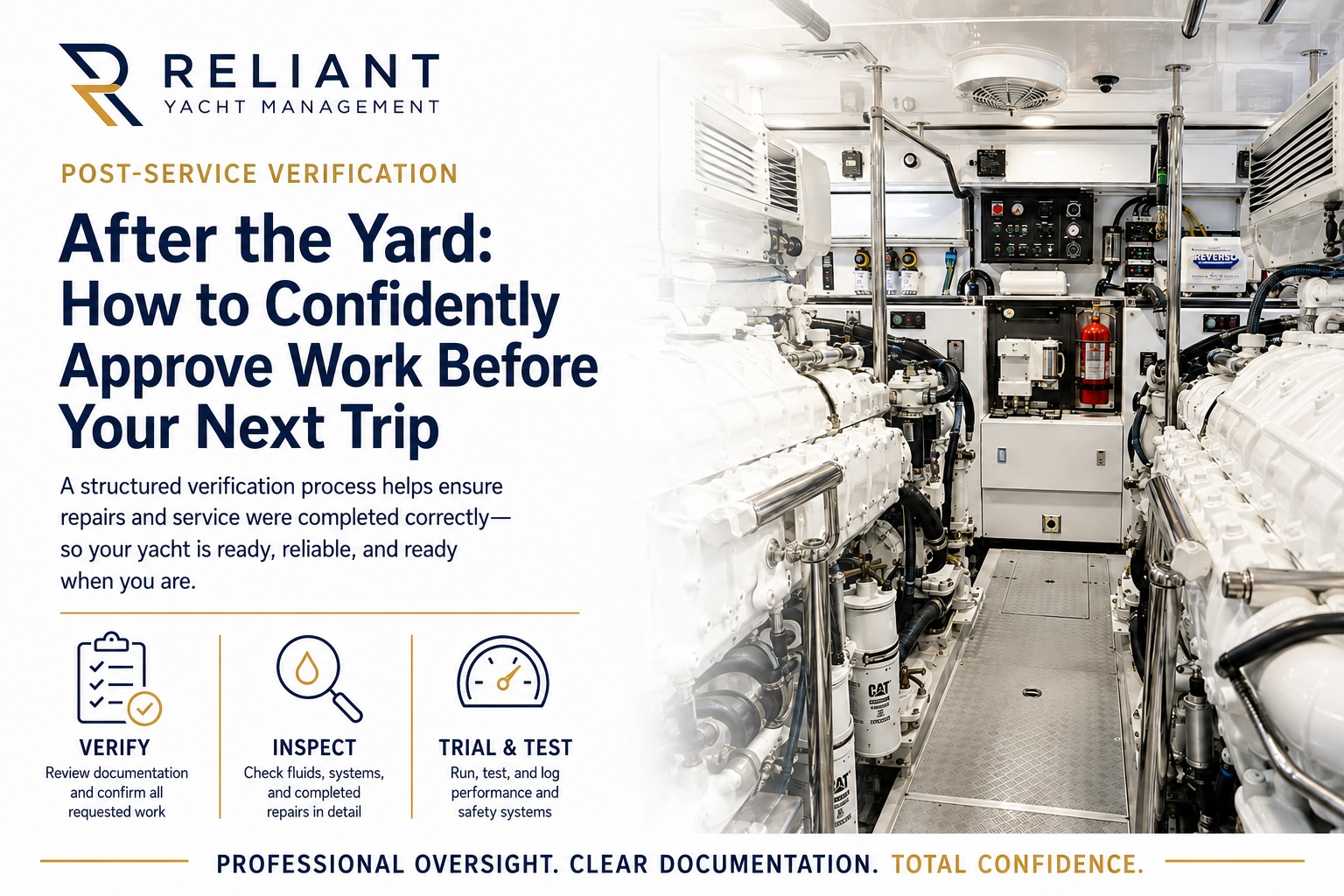
Engine room and machinery spaces:
-
Verify fluid levels:
- Engine oil, transmission oil, coolant
- Hydraulic fluid (steering, thrusters, stabilizers if applicable)
- Generator oil and coolant
-
Confirm new filters are installed where billed:
- Engine and generator oil filters
- Racor/fuel-water separators
- Air filters
-
Inspect for tool and debris cleanup:
- No loose hardware, rags, or wire offcuts
- All access panels and floorboards reinstalled
- Check hose clamps and connections around serviced components
- Confirm seacocks that should be open/closed are in the correct position
Electrical and control systems:
- Breakers and battery switches in correct positions
- New or moved wiring properly supported and labeled
- No exposed conductors or temporary “test” connections left in place
All findings should be photographed and documented. Reliant’s Vessel Intelligence platform keeps these pre-start images with date, location, and notes, making it easy to compare condition over time.
3. Cold Start: Monitor, Don’t Rush
Your first engine start after service is a critical test. Stay in the machinery space as long as safely possible.
On start-up:
-
Listen for abnormal sounds:
- Knocking, squealing belts, unusual vibration
-
Watch for immediate leaks:
- Fuel weeping at injector lines or filters
- Raw water leaks at pump seals and hoses
- Drips at newly serviced fittings or coolers
-
Confirm proper fluid pressures and temperatures:
- Oil pressure rises quickly to expected range
- Water flow from exhaust is strong and consistent
- No immediate overheat tendency
Log key data within the first 5–10 minutes:
- Engine hours
- Oil pressure and coolant temperature
- Generator voltage, frequency, and load (if running)
- Any alarms at start or shortly after
Reliant routinely records these readings, with photos of instrument panels, so owners can review baseline conditions and compare them on subsequent trips.
4. Check Alarms and Safety Systems
After service, never assume alarms and protections work just because they did last season.
Test as appropriate for your vessel:
- Engine and generator high temp/low oil pressure alarms (following manufacturer-approved test methods)
-
Bilge pump operation and alarms:
- Manually lift float switches or use test buttons
- Confirm both pump and alarm activate
- Fire detection and fixed suppression indicators
- High-water alarms in machinery/rudder compartments
Any non-functional sensor or alarm should be corrected before you accept the boat back into service. For absentee owners, Reliant documents each test with written notes and photos or short clips when useful.
5. Inspect for Slow Leaks and Seepage
Some issues don’t appear at start-up—they show themselves over 30–60 minutes of operation.
While engines run at the dock:
- Recheck bilges beneath engines, transmissions, and shafts
-
Look for fresh drips on:
- Shaft seals and rudder posts
- Heat exchanger end caps
- Filter housings and hose connections
- Inspect all through-hull and seacock areas that were touched
Document:
- “Before run” bilge condition (clean/dry)
- “After run” condition with any new moisture or staining
Reliant uses consistent photo angles in these areas so changes are easy to spot. AI tools can assist by flagging new corrosion, staining, or dampness, but final judgment always comes from an experienced eye.
6. Structured Sea Trial: Not Just a Quick Spin
A proper sea trial is more than leaving the no-wake zone and turning around. Plan a short, focused run with specific checkpoints.
At idle and no-wake speeds:
- Verify steering and shift response
- Check for abnormal vibration or steering pull
- Confirm engines hold stable temperature and oil pressure
At cruise speed:
-
Record:
- RPM, speed over ground, fuel burn (if available)
- Oil pressure and temperature at each engine
- Exhaust temperature (if monitored)
-
Note any:
- Hesitation coming onto plane
- Excessive smoke (color and duration)
- New rattles, resonances, or hull vibrations
At higher load (as appropriate for the vessel):
- Briefly bring engines up toward manufacturer-recommended maximums
- Confirm they can reach expected RPM without abnormal temperature or alarm
Throughout the trial:
- Periodically check machinery spaces for leaks and unusual smells
- Verify generator performance under realistic onboard loads (HVAC, galley, etc.)
All data points—RPM, speed, temperatures, and observations—should be logged against date, location, and conditions. This becomes part of the vessel’s performance history, not just a one-time note.
7. Final Acceptance Walk-Through and Signoff
Once the sea trial is complete and the vessel is safely secured:
Do a last-pass inspection:
-
Recheck all serviced areas for:
- New drips, residue, or shavings
- Missing fasteners or loose panels
- Confirm all tools, parts, and trash have been removed
- Ensure all access hatches are secured, bilge plugs installed (on trailerable boats), and seacocks in correct positions
Formalize acceptance:
-
Match yard invoice line items to:
- Visual confirmation of parts installed
- Test results from sea trial and dock checks
-
Note:
- Any deficiencies requiring rework
- Items that function but need future attention
-
Capture and save:
- Photos of completed work
- Sea trial data
- Notes on remaining recommendations
Reliant provides owners with a concise post-yard report: what was done, how it was verified, any outstanding concerns, and recommended next steps. Through the Reliant Vessel Intelligence platform, this becomes part of the yacht’s permanent operational record—accessible whether you’re five miles away or five states away.
Why This Process Matters for Absentee and Busy Owners
For seasonal residents, busy professionals, and owners managing yachts from a distance, the real risk isn’t just a mechanical failure; it’s the domino effect:
- Cancelled trips with family or clients
- Lost confidence in your vessel
- Scrambling for emergency service instead of planned care
A structured, documented post-service verification process:
- Reduces surprises before your next departure
- Protects your time by catching issues while the yard is still engaged
- Builds a history of how your yacht actually performs over time
- Creates accountability for vendors and technicians
It’s not about distrusting your yard. It’s about adding professional oversight, clear documentation, and a methodical system between “work completed” and “we’re ready to go.”
If you’d like this level of verification and documentation after every yard visit, Reliant Yacht Management can act as your on-the-water representative. Contact us to discuss a tailored management program for your yacht on Florida’s Space Coast or in Southwest Florida.