What New Florida Yacht Owners Need to Know About Space Coast & Southwest Florida Maintenance
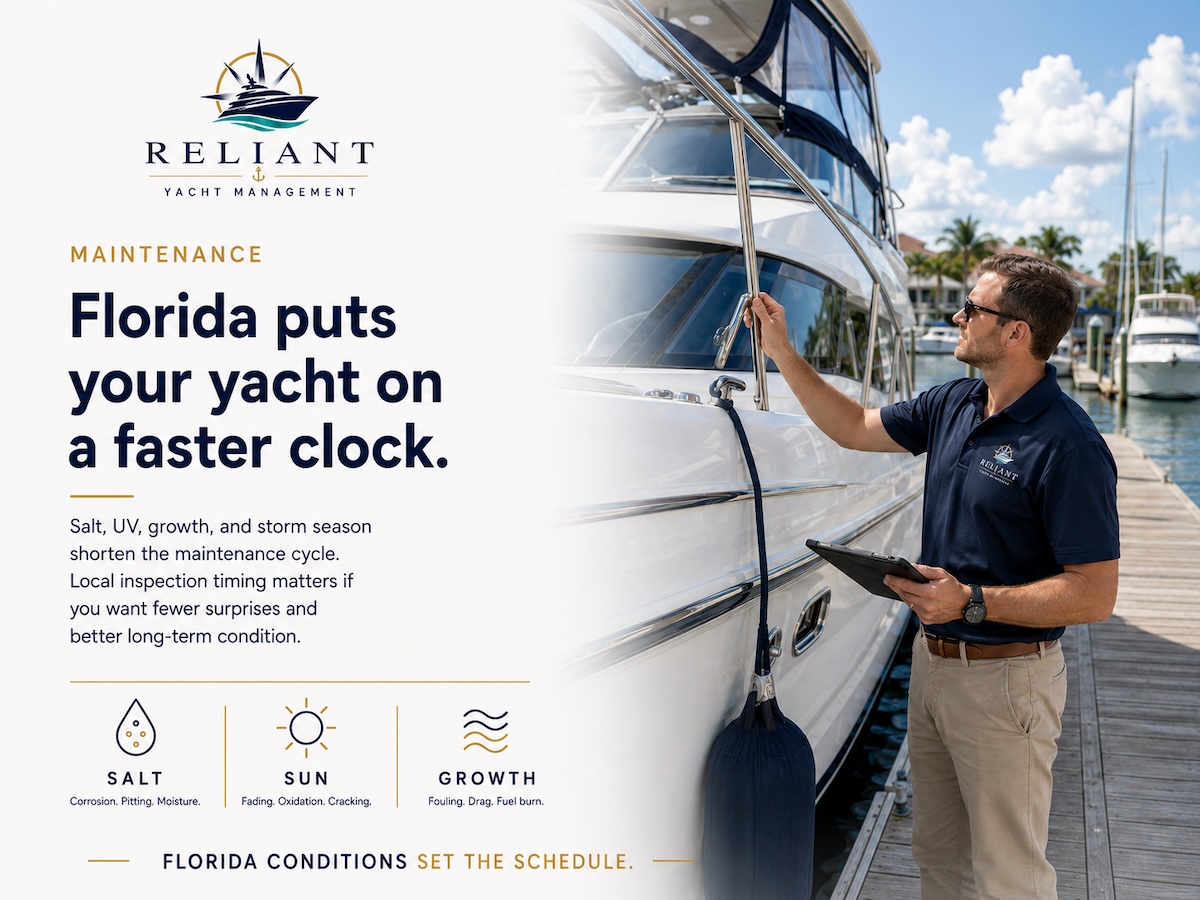
Owning a yacht on Florida’s Space Coast or in Southwest Florida is very different from keeping a boat in the Northeast, Great Lakes, or inland waters. The same salt, sun, growth, and storm cycles that make these areas incredible for boating also put your vessel on an unforgiving maintenance clock.
If you’re new to these waters—or managing your yacht remotely—understanding local wear patterns is essential. When you match inspections and service schedules to actual Florida conditions, you prevent problems instead of reacting to them.
This overview focuses on what really happens to yachts here, and how to plan around it.
How Florida’s Environment Really Affects Your Yacht
1. Salt: Constant Exposure, Constant Attack
On the Space Coast and along the Southwest Florida coast, your yacht is exposed to:
- Warm, salty air 24/7
- Regular spray, even at the dock
- High humidity that keeps surfaces damp, not dry
The result is accelerated:
- Corrosion on stainless, aluminum, electrical connectors, hinges, latches, and engine components
- Surface staining and pitting on rails, fittings, cleats, and hardware
- Electrical issues from trapped moisture and salt on terminals and connections
What this means for your schedule:
- Exterior washdowns should be weekly, not “when it looks dirty.”
- Close-up visual inspections of metalwork and exposed connections should be monthly.
- Corrosion control (cleaning, treating, lubricating) should be part of every inspection—not just once a year.
2. Sun: UV Damage that Shows Up in Seasons, Not Years
Florida UV is harsh year-round, and both the Space Coast and Southwest Florida see extended periods of direct exposure. The damage shows up as:
- Canvas and upholstery: Fading, cracking, stitching failure, chalking of vinyl
- Isinglass and enclosures: Yellowing, clouding, brittleness, seam separation
- Gelcoat and paint: Oxidation, dulling, hairline cracking, chalky residue
- Plastics and rub rails: Brittling and discoloration
If you’re used to shorter boating seasons, Florida’s UV timelines surprise many owners:
- Canvas and clear panels that lasted 8–10 seasons elsewhere may fail in 3–5 here.
- Glossy finishes can start to dull noticeably in a single year without protection.
- Uncovered helm stations deteriorate much faster than covered or enclosed ones.
What this means for your schedule:
- Waxing is often needed twice per year in full Florida sun, not just annually.
-
Canvas and enclosure inspections should be part of every visit, looking at:
- Thread and stitching
- Zippers and fasteners
- Clear panel flexibility and clarity
- Helm and upholstery covers should be treated as essential equipment, not optional.
3. Growth: Bottom Fouling by Waterway, Season, and Slip
Warm, nutrient-rich Florida waters mean marine growth is not a slow process—it’s constant.
On the Space Coast (Indian River Lagoon, ICW) and in Southwest Florida (Naples, Fort Myers, Punta Gorda, barrier island marinas), bottom growth rates vary by:
- Water movement – Quiet canals and basins foul faster than open, moving water.
- Salinity and temperature – Summer and early fall are especially aggressive.
- Bottom paint type and age – Not all coatings perform equally in local conditions.
Common realities:
- Light growth can appear on running gear in weeks, not months.
- A “once-a-year haul-out and paint” assumption often fails here.
- Performance and fuel burn can change noticeably between cleanings.
What this means for your schedule:
- Bottom cleaning is typically needed every 3–5 weeks depending on your slip and usage.
- Diver reports should be documented—growth patterns, paint condition, anodes, and any new damage.
- Bottom paint in Florida often needs to be evaluated annually, with realistic expectations about its service life in local waters.
4. Storm Cycles: Planning Around a Predictable Season
Florida’s storm and hurricane season runs June 1 through November 30, but the most active period usually falls between mid-August and early October. On both the Space Coast and Southwest Coast, you’re planning for:
- Named storms that may or may not make landfall
- Multiple “near misses” that still bring surge, wind, and heavy rain
- Short-notice watches and warnings when you may be out of state
For absentee and seasonal owners, the real risk is not only the storm itself—it’s the lack of a clear plan and accountable execution.
A realistic storm readiness plan should include:
-
Pre-season preparation
- Inspecting and documenting dock lines, fenders, chafe protection, and hardware
- Confirming haul-out reservations or hurricane plans with marinas if applicable
- Reviewing canvas, enclosures, and loose gear that would be removed or secured
-
Storm approach checklist
- Reducing windage (canvas down, cushions and loose items removed)
- Doubling and adjusting lines, adding fenders, checking cleats and attachment points
- Securing shore power and protecting critical systems
-
Post-storm inspection
- On-site vessel checks for damage, chafe, water intrusion, and system status
- Photographic documentation for your records and potential insurance needs
- Follow-up on any new concerns that appeared during the storm
What this means for your schedule:
- Storm plans should be confirmed before June, not when a named storm appears.
- A designated owner’s representative should be responsible for executing the plan and documenting every step, especially if you are away.
Matching Inspection and Service Schedules to Florida Conditions
When you align your inspection calendar with Florida’s actual environment, you stop chasing emergencies and start preventing them.
Monthly (Year-Round)
- Full exterior walkaround with photos and notes
- Check for corrosion, staining, leaks, chafe, and loose hardware
- Canvas, enclosure, and window inspection
- Basic systems check (bilge, pumps, shore power status, air conditioning condensate)
- Vendor and diver reports captured and summarized
Every 3–6 Months
- Detailed engine room and machinery-space inspections
- Review of all electrical panels, batteries, connections, and bonding
- Interior moisture checks (hatches, windows, head compartments, bilges)
- Update preventive maintenance schedules based on actual usage and findings
Seasonally
- Pre-summer: UV protection review, wax and sealants, canvas condition assessment
- Pre-storm season (late spring): Storm plan verification and dock arrangement review
- Post-storm season: Structural and systems inspection for cumulative wear
- Annually: Comprehensive vessel condition review with documented recommendations
For absentee owners, all of this should be:
- Documented in writing
- Supported with dated photographs
- Organized by system (hull, deck, machinery, electrical, safety, interior)
- Trackable over time so you can see trends—not just isolated snapshots
How Professional Oversight Changes the Ownership Experience
In Florida’s environment, “no news” is rarely accurate unless someone is actually aboard and looking. The difference between reactive repairs and intelligent yacht management is:
- Consistent inspections instead of sporadic visits
- Preventive maintenance aligned to real local conditions
- Verified vendor work with someone checking what was promised versus what was done
- Clear visibility into your yacht’s condition, wherever you are
At Reliant Yacht Management, we pair on-the-dock professional oversight with organized documentation through our Reliant Vessel Intelligence platform. Every inspection, concern, recommendation, and project is recorded so you understand:
- What’s happening aboard
- Why it matters
- What should happen next
If you own a yacht on Florida’s Space Coast or in Southwest Florida and want more confidence—not more surprises—let’s talk about a management and inspection schedule tailored to your waters, your slip, and your time away.